
Skip to content
An older woman smiling up at a carer whose hand rests on her shoulder

For older adults

Massage for the elderly

Lighter pressure and unhurried pacing, delivered at home — so there is no journey to arrange and nothing to explain on arrival.

Book a Treatment
Booking for a parent?Book on their behalf →
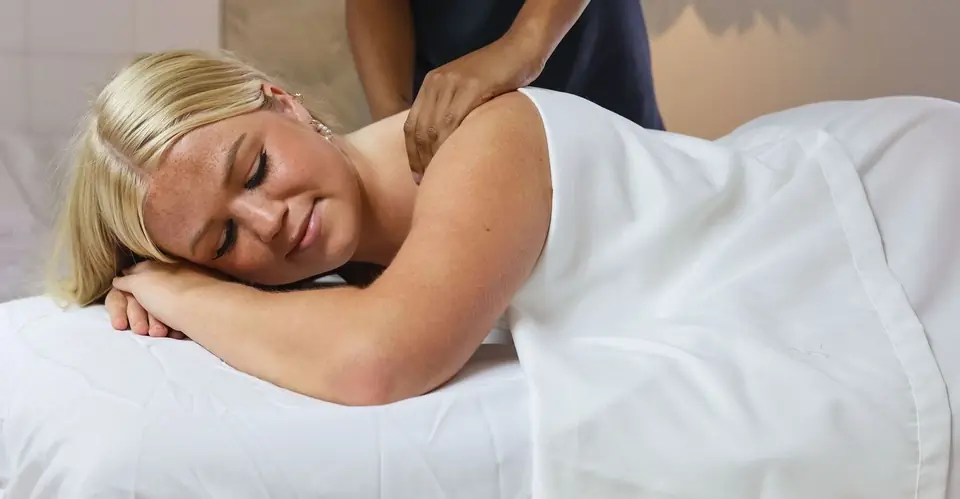
A client resting with eyes closed while a therapist works along her back

Familiar room, unhurried hour.

For older adults the barrier is rarely willingness — it is the logistics. A clinic visit means transport, a waiting room, and explaining the same history again.

At home none of that applies. The practitioner works around what is comfortable, at the pace the person in front of them sets.

The barrier is rarely willingness

It is the logistics. A clinic visit means arranging transport, sitting in a waiting room, and explaining the same history again to someone new. At home none of that applies, and a course of treatment is far more likely to be finished.

How much do you know about massage?

For older adults the questions are usually about pain, sleep and staying mobile. Those happen to be the three things massage is most often used for.

  • Pain that has outlasted its cause

    Massage is among the better-studied non-drug options for persistent musculoskeletal pain, particularly in the lower back, neck and shoulders. It will not resolve a structural problem, but where pain is being held in soft tissue, sustained work on that tissue is often what releases it.

  • Sleep that actually restores

    People commonly report falling asleep faster and waking less in the nights following a treatment. The likely reason is unglamorous: a body less braced against discomfort, and a nervous system that has spent an hour somewhere other than alert.

  • Stress you are carrying physically

    Stress registers in the body long before anyone names it — a jaw, a set of shoulders, a lower back that will not settle. An hour of sustained, predictable pressure is a reliable way to interrupt that pattern, which is why regularity matters more than intensity.

  • Range you had quietly given up

    Reaching overhead, turning to look behind you, sleeping on one side. These go without anyone deciding to stop. Working through the tissue restricting them often returns the range well before the strength follows.

Frequently asked questions

Yes. Book as normal and add their name, contact details and any preferences at the booking step.

Yes. Side-lying and seated positions are both routine, and you can note anything relevant when you book.

Of course. A family member or carer is welcome to stay for the session.