
Skip to content
A client relaxing with her eyes closed during a massage

For your benefits

HSA & FSA funds

Massage can qualify for HSA and FSA funds when a physician provides a letter of medical necessity.

Whether a treatment is eligible is decided by your plan administrator, not by GLOZEN. Check with your plan before you book.

Book with HSA/FSA
Already have your letter?Book with HSA/FSA funds →
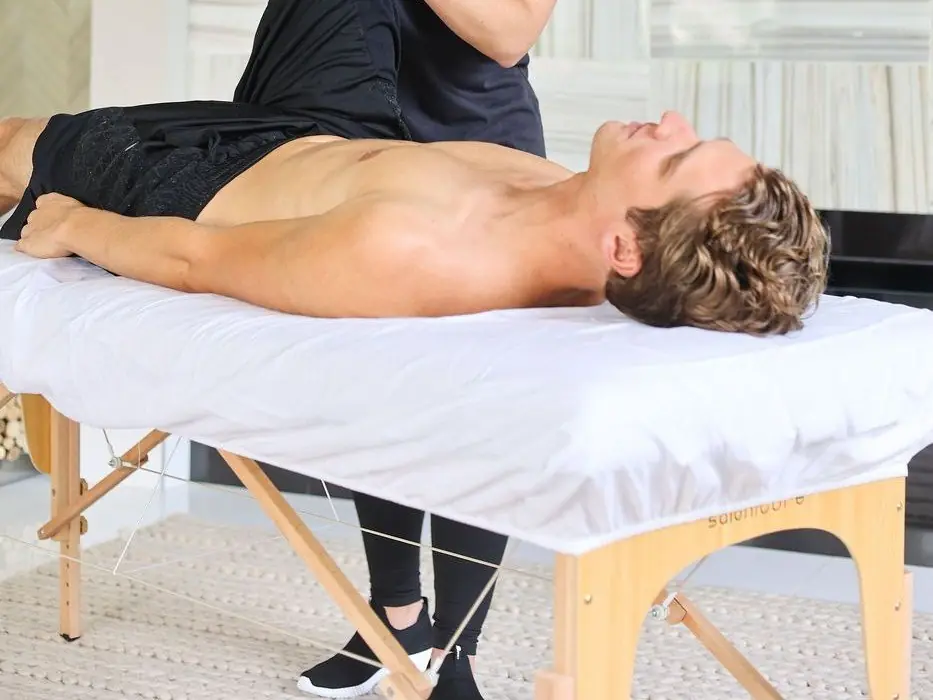
A practitioner stretching a client’s leg during a recovery session

Money you have already set aside.

HSA and FSA balances are pre-tax dollars earmarked for medical costs, and massage prescribed for a diagnosed condition frequently qualifies among them.

The requirement almost every plan shares is documentation: a letter of medical necessity from your physician, and a receipt showing what was treated and when.

Documentation is the whole hurdle

The requirement almost every plan shares is paperwork: a letter of medical necessity from your physician naming the condition, and an itemised receipt showing what was treated and when. Get those two right and the rest is ordinary.

What your plan is being asked to cover

A plan administrator wants to know what condition is being treated and why massage forms part of the treatment for it. Understanding the benefit makes that conversation shorter.

  • Pain that has outlasted its cause

    Massage is among the better-studied non-drug options for persistent musculoskeletal pain, particularly in the lower back, neck and shoulders. It will not resolve a structural problem, but where pain is being held in soft tissue, sustained work on that tissue is often what releases it.

  • Sleep that actually restores

    People commonly report falling asleep faster and waking less in the nights following a treatment. The likely reason is unglamorous: a body less braced against discomfort, and a nervous system that has spent an hour somewhere other than alert.

  • Stress you are carrying physically

    Stress registers in the body long before anyone names it — a jaw, a set of shoulders, a lower back that will not settle. An hour of sustained, predictable pressure is a reliable way to interrupt that pattern, which is why regularity matters more than intensity.

  • Range you had quietly given up

    Reaching overhead, turning to look behind you, sleeping on one side. These go without anyone deciding to stop. Working through the tissue restricting them often returns the range well before the strength follows.

Frequently asked questions

No. Eligibility depends on your plan and usually on a physician documenting a condition the treatment addresses. Your plan administrator makes the final decision.

A short statement from your physician naming the condition being treated and explaining why massage forms part of the treatment for it.

Yes. Every booking produces an itemised receipt showing the treatment, the date and the amount paid.